A hybrid electric vehicle (HEV) combines a gasoline engine with one or more electric motors to improve fuel economy and reduce emissions. Unlike plug-in hybrids, HEVs cannot be plugged in; they recharge their batteries through regenerative braking and engine power. The 1997 Toyota Prius was the world’s first mass-produced HEV, and today hybrids deliver 30–50% better fuel economy than conventional gas cars.
- No plug required self-charging via braking and engine
- 30–50% better MPG than equivalent gas-only vehicles
- Three architectures: series, parallel, and series-parallel
Introduction
Buying a car in 2026 means confronting an alphabet soup of electrified options: HEV, PHEV, BEV, and mild hybrid. For most drivers, the hybrid electric vehicle (HEV) remains the smartest entry point with no charging infrastructure required, no range anxiety, and fuel savings that start from day one.
At Modren Vehicles, we’ve analyzed EPA data, real-world owner reports, and repair cost databases to build this guide. Whether you’re comparing a Toyota Camry Hybrid to its gas twin or trying to understand why your hybrid’s brakes last twice as long, this article gives you actionable answers. We’ll cover how HEVs work, how they differ from plug-ins and EVs, which models lead the 2026 rankings, and the hidden cost savings most buyers overlook.
What Is a Hybrid Electric Vehicle (HEV)?
A hybrid electric vehicle (HEV) is a car that uses both an internal combustion engine and an electric motor for propulsion. The electric motor assists during acceleration, powers low-speed driving, and enables engine-off coasting all without ever plugging into a wall outlet. HEVs sit between conventional gas cars and full EVs on the electrification spectrum.
Full Hybrid vs Mild Hybrid: What’s the Real Difference?
Full hybrids can drive short distances using only electric power and typically achieve 40–57 MPG. Mild hybrids use a smaller motor (often 48-volt) that cannot power the car alone; they only assist the engine and deliver modest efficiency gains of 10–15%. Most shoppers should target full hybrids for meaningful fuel savings. Learn more about electrified powertrains in our PHEVs vs Hybrid comparison guide.
How Does a Hybrid Electric Vehicle Work?
A hybrid electric vehicle works by blending power from its gasoline engine and electric motor through an intelligent control system. At low speeds, the electric motor drives the car alone. During acceleration or hill climbing, both sources work together. When you brake, the system captures kinetic energy and converts it into electricity to recharge the battery.
Regenerative Braking: How HEVs Recharge Without a Plug
Regenerative braking turns the electric motor into a generator when you decelerate. Instead of wasting momentum as heat through friction brakes, the system converts up to 30% of that energy back into stored electricity. This is why hybrid brake pads often last 80,000–100,000 miles roughly double the lifespan of conventional brakes.
Electric Motor Assist and Automatic Engine Shutoff
The electric motor provides instant torque from a standstill, allowing the gas engine to stay off during startup and low-speed cruising. When the vehicle stops at a light, the engine shuts off automatically to eliminate idle fuel waste. The motor restarts the engine seamlessly when you press the accelerator.
Series vs Parallel vs Series-Parallel: Which HEV Architecture Wins?
Hybrid electric vehicles use three distinct powertrain architectures. The design determines how the engine and motor deliver power to the wheels and significantly impacts efficiency, complexity, and driving feel.
Series Hybrid vs Parallel Hybrid: Key Differences
In a series hybrid, the gasoline engine never drives the wheels directly. It acts solely as a generator to charge the battery, while electric motors provide all propulsion. In a parallel hybrid, both the engine and electric motor can power the wheels directly either together or independently. Parallel hybrids are more common because they deliver better highway efficiency.
Series-Parallel Hybrid: Toyota’s Power-Split Innovation
The series-parallel hybrid combines both approaches using a planetary gearset. At low speeds, it operates like a series hybrid (electric-only propulsion). At highway speeds, the engine connects directly to the wheels like a parallel hybrid. Toyota’s system, introduced in the 1997 Prius, remains the most proven architecture with over 20 million vehicles sold worldwide.
HEV vs PHEV vs EV: The Complete Comparison
Understanding the differences between hybrid electric vehicles, plug-in hybrids, and full EVs is critical before buying. Each serves a different driver profile, infrastructure need, and budget.
| Feature | HEV (Hybrid) | PHEV (Plug-In Hybrid) | EV (Full Electric) |
| Charging | Self-charging (no plug) | Plug-in required | Plug-in required |
| Battery Size | 0.9–1.5 kWh | 13–25+ kWh | 50–100+ kWh |
| Electric-Only Range | 0–2 miles | 25–55 miles | 200–400+ miles |
| Fuel Required | Gasoline | Gasoline + electricity | Electricity only |
| Best For | No charging access | Short commutes + long trips | Home charging available |
| Avg. Price Premium | $1,500–$3,000 | $5,000–$10,000 | $5,000–$15,000 |
Do You Need to Plug In a Hybrid Electric Vehicle?
No. A standard hybrid electric vehicle never needs to be plugged in. The battery charges automatically through regenerative braking and excess engine power. This is the primary distinction between HEVs and PHEVs. If you lack home charging or reliable public infrastructure, an HEV eliminates that concern entirely.
Battery Size and Electric Range Comparison
HEV batteries are small, typically under 1.5 kWh, or roughly the capacity of three laptop batteries. PHEV batteries are 10–20× larger, enabling 25–55 miles of electric-only driving. EV batteries are 50–100× larger. The smaller HEV battery keeps weight and cost down while still delivering significant efficiency gains.
Hybrid Electric Vehicle Battery Size Explained
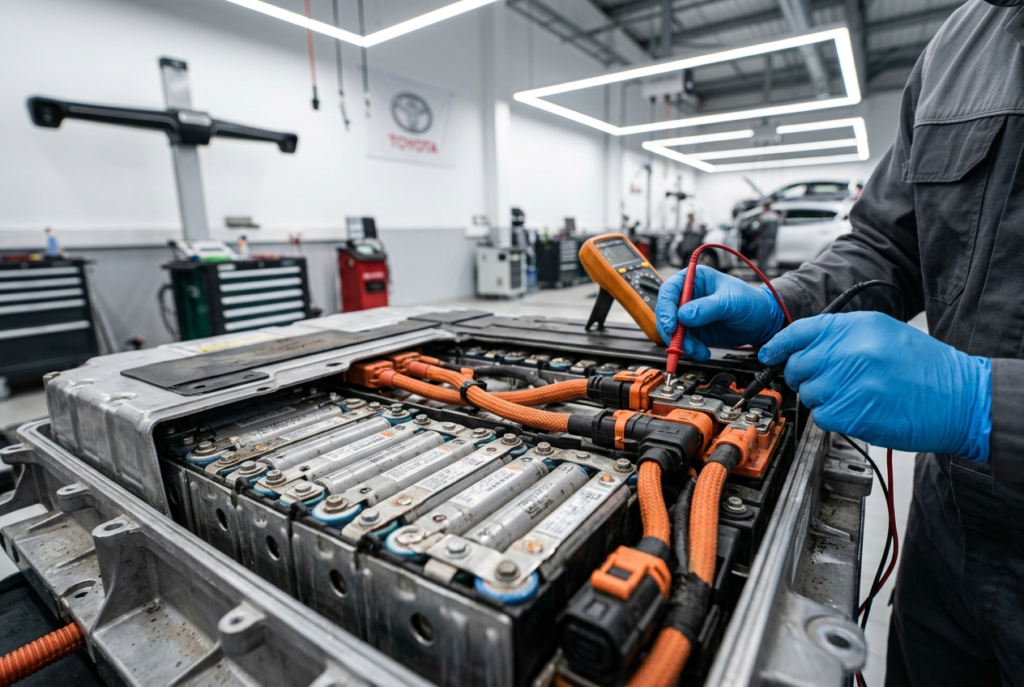
Battery capacity is the single biggest technical differentiator between HEVs, PHEVs, and EVs. Understanding scale helps buyers set realistic expectations for efficiency and replacement costs.
Typical HEV Battery Capacity: 0.9 to 1.5 kWh
Most full hybrid electric vehicles use nickel-metal hydride or lithium-ion battery packs ranging from 0.9 kWh to 1.5 kWh. For context, the Toyota Prius Hybrid carries a 0.91 kWh pack, while the Hyundai Sonata Hybrid uses a slightly larger 1.62 kWh unit. These batteries are designed for rapid charge/discharge cycles rather than long-range storage.
How Battery Size Impacts Real-World Efficiency
Smaller batteries mean lower weight and cost, but they also limit electric-only driving to brief moments. The real efficiency gain comes from the motor’s ability to capture braking energy and assist the engine, not from storing large amounts of electricity. This is why HEVs achieve 40–57 MPG without the complexity of plug-in charging.
Top 10 Best Hybrid Electric Vehicles for 2026
The 2026 hybrid market offers exceptional choices across every vehicle class. These rankings combine EPA fuel economy data, starting MSRP, and value-per-MPG efficiency scores.
| Rank | Vehicle | Class | Starting Price | Combined MPG |
| 1 | Hyundai Elantra Hybrid | Compact Sedan | $26,695 | 54 MPG |
| 2 | Toyota Prius | Hatchback | $29,845 | 57 MPG |
| 3 | Hyundai Sonata Hybrid | Mid-Size Sedan | $30,445 | 51 MPG |
| 4 | Toyota Corolla Cross Hybrid | Subcompact SUV | $31,190 | 42 MPG |
| 5 | Kia Sportage Hybrid | Compact SUV | $31,985 | 42 MPG |
| 6 | Ford Maverick Hybrid | Pickup Truck | $29,990 | 38 MPG |
| 7 | Honda Accord Hybrid | Mid-Size Sedan | $30,595 | 51 MPG |
| 8 | Toyota Camry Hybrid | Mid-Size Sedan | ~$30,000 | 51 MPG |
| 9 | Hyundai Santa Fe Hybrid | Mid-Size SUV | $38,000 | 36 MPG |
| 10 | Toyota Sienna | Minivan | $42,415 | 36 MPG |
Best Compact HEV: 2026 Hyundai Elantra Hybrid (54 MPG)
The Elantra Hybrid tops the value charts with a 54 MPG combined rating and a sub-$27,000 starting price. Its 1.6-liter engine paired with a 32 kW electric motor delivers 139 horsepower enough for daily commuting without the hybrid premium of rival sedans.
Best Hybrid SUV: 2026 Kia Sportage Hybrid (42 MPG)
With standard all-wheel drive and a spacious interior, the Sportage Hybrid proves that efficiency doesn’t require downsizing. Its 1.6-liter turbo hybrid system produces 227 horsepower while returning 42 MPG combined, a figure that rivals many compact sedans.
Best Hybrid Truck: 2026 Ford Maverick (38 MPG)
The Maverick remains the only affordable hybrid pickup in America. Its 2.5-liter hybrid powertrain delivers 191 horsepower and 38 MPG combined, making it ideal for buyers who need utility without F-150 fuel bills. Explore our full truck comparison guide for detailed payload and towing specs.
HEV Fuel Economy: Real-World MPG vs EPA Ratings
Hybrid electric vehicles consistently outperform their EPA city ratings in real-world driving, but highway efficiency tells a different story. Understanding this split helps buyers match a hybrid to their actual commute.
Why Hybrids Excel in City Driving
Hybrids achieve their best fuel economy in stop-and-go traffic because regenerative braking recaptures energy at every slowdown, and the electric motor handles low-speed propulsion. A Toyota Prius rated at 57 MPG combined often exceeds 60 MPG in dense urban driving. This is the inverse of conventional cars, which typically perform better on highways.
Highway Efficiency: When Hybrids Lose Their Edge
At sustained highway speeds above 60 MPH, the gas engine does most of the work and the hybrid advantage shrinks. The electric motor provides minimal assistance, and aerodynamic drag dominates fuel consumption. Expect highway MPG to land within 5–10% of the EPA rating rather than exceeding it.
5 Common Hybrid Electric Vehicle Mistakes to Avoid
Even informed buyers make costly errors when shopping for hybrids. Avoid these pitfalls to ensure your HEV purchase delivers the savings you expect.
- Buying without calculating break-even. Divide the hybrid price premium by your annual fuel savings. If payback exceeds 7 years, reconsider.
- Choosing the wrong architecture for your commute. City drivers benefit most from parallel hybrids; mixed commuters should consider series-parallel systems.
- Ignoring highway driving patterns. If 80% of your miles are highway, a diesel or efficient gas car may match hybrid savings.
- Overlooking maintenance cost differences. Hybrids save on brakes but may cost more for specialized service at non-hybrid shops.
- Assuming all hybrids use the same technology. Toyota’s planetary gear system behaves very differently from Hyundai’s dual-clutch hybrid setup.
Buying Without Running a Break-Even Fuel Savings Analysis
Use this formula before signing: (Hybrid MSRP − Gas MSRP) ÷ (Annual Gas Cost Savings) = Payback Years. If the Hyundai Elantra Hybrid costs $2,500 more than the gas Elantra and saves you $600 annually in fuel, your break-even is 4.2 years. Use our fuel savings calculator to run the numbers for any model.
Assuming All Hybrid Systems Perform Identically
Toyota’s power-split eCVT delivers seamless acceleration but can feel rubber-banded under hard throttle. Hyundai’s six-speed automatic hybrid feels more conventional but shifts less smoothly during electric-gas transitions. Test drive both types before deciding.
Hybrid Battery Lifespan and Replacement Cost Guide
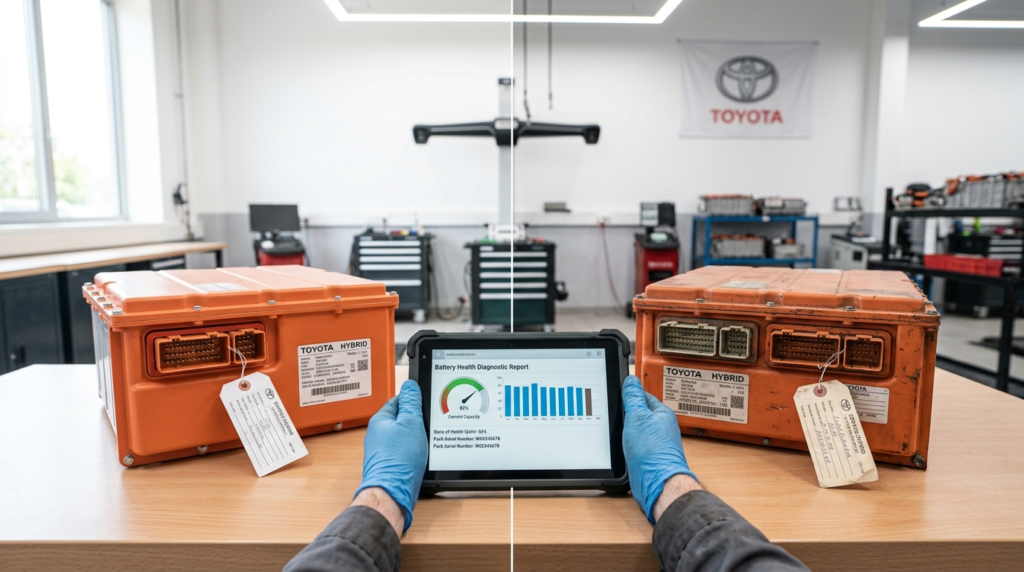
Battery longevity is the most common concern among prospective hybrid buyers. The data overwhelmingly supports HEV reliability.
How Long Do HEV Batteries Last? (150,000–200,000+ Miles)
Modern hybrid batteries routinely last 150,000 to 200,000 miles before significant degradation. Toyota reports many original Prius batteries exceeding 250,000 miles. Battery management systems prevent deep discharge and overheating of the two primary killers of lithium-ion and NiMH cells.
Replacement Cost and Warranty Coverage in 2026
A replacement HEV battery pack costs $2,000–$4,500 including labor, depending on the model. However, federal law mandates an 8-year/100,000-mile warranty on all hybrid battery components. In California and states adopting CARB rules, that extends to 10 years/150,000 miles. Most owners never pay for battery replacement.
HEV Tax Credits and State Incentives for 2026
While full EVs capture most headlines, hybrid electric vehicles still qualify for select incentives that reduce total ownership costs.
Federal Incentives for Hybrid Electric Vehicles
Standard HEVs no longer qualify for the federal Clean Vehicle Tax Credit, which now requires plug-in capability and domestic battery sourcing. However, some state-level programs still reward HEV purchases with rebates, reduced registration fees, or tax exemptions.
State Rebates, HOV Lane Access, and Parking Benefits
California, Colorado, and several Northeast states offer HOV lane access for qualifying hybrids. Some municipalities provide free or discounted parking for high-efficiency vehicles. Check your state’s clean vehicle program for current eligibility rules change annually.
Hybrid Electric Vehicle Maintenance Costs vs Gas Cars
Hybrids cost less to maintain than most buyers expect. The electrified components reduce wear on traditional systems.
Brake Pad Savings: How Regenerative Braking Cuts Costs
Regenerative braking reduces reliance on friction brakes by 50–70%. The result: brake pads and rotors often last 80,000–100,000 miles on hybrids versus 30,000–50,000 miles on conventional cars. Over 100,000 miles, this saves $800–$1,200 in brake service alone.
Oil Change Intervals and Engine Wear Reduction
Because the gas engine runs less frequently and operates in its optimal RPM range, oil degradation slows. Many hybrid owners safely extend oil changes to 7,500–10,000 miles versus the traditional 5,000-mile interval. The engine also experiences fewer cold starts, reducing long-term wear.
FAQ: Hybrid Electric Vehicles Explained
Q1: What is a hybrid electric vehicle (HEV)?
An HEV combines a gasoline engine with an electric motor and battery to improve fuel economy. It cannot be plugged in and the battery recharges through braking and engine power.
Q2: What was the world’s first mass-produced hybrid electric vehicle?
The Toyota Prius, launched in Japan in December 1997. It was the first hybrid passenger vehicle produced at scale and was later recognized as an IEEE Milestone for its engineering significance.
Q3: Do hybrid electric vehicles need to be plugged in?
No. Standard HEVs are self-charging. Only plug-in hybrids (PHEVs) and full EVs require external charging.
Q4: What is the difference between HEV and PHEV?
HEVs have small batteries (under 1.5 kWh) and cannot drive on electricity alone for more than a mile or two. PHEVs have larger batteries (13–25+ kWh), can be plugged in, and offer 25–55 miles of electric-only range.
Q5: How long do hybrid batteries last?
Most HEV batteries last 150,000–200,000+ miles. Federal warranty coverage requires 8 years/100,000 miles minimum.
Q6: Which is a characteristic of many hybrid electric vehicle gasoline engines?
Many HEVs use an Atkinson-cycle engine rather than the traditional Otto cycle. The Atkinson design sacrifices peak power for superior thermal efficiency, which pairs perfectly with the electric motor’s torque fill.
Q7: What size battery is found in a hybrid electric vehicle?
Full HEVs typically use 0.9 to 1.5 kWh battery packs roughly the capacity of 2–4 laptop batteries. This is far smaller than PHEV (13–25 kWh) or EV (50–100+ kWh) batteries.
Q8: Are hybrid electric vehicles worth it in 2026?
Yes, for drivers with city or mixed commutes who lack home charging. The break-even period typically ranges from 3–6 years depending on fuel prices and annual mileage. Use our hybrid savings calculator to check your specific numbers.
Is a Hybrid Electric Vehicle Right for You in 2026?
A hybrid electric vehicle is the right choice if you want meaningful fuel savings without changing your driving habits or installing home charging. HEVs deliver 30–50% better fuel economy than gas cars, require no plug-in infrastructure, and have proven reliability spanning millions of vehicles and two decades.
Choose a parallel or series-parallel hybrid if your driving is mostly city and suburban. If you have reliable home charging and short daily commutes, a PHEV may deliver even greater savings. For pure highway warriors, compare break-even carefully the hybrid advantage narrows at sustained high speeds.
At Modren Vehicles, we help buyers cut through the complexity with data-driven comparisons, real owner cost data, and expert-tested reviews. Browse our 2026 hybrid rankings or use our fuel savings calculator to find your perfect match.



0 Comments