Finding a dependable electric vehicle charging station right now is one of the biggest concerns for anyone switching over to an EV, and honestly it can feel kinda confusing. Whether you’re looking for an electric vehicle charging station near me, or trying to figure out the electric vehicle charging station cost, or you’re planning to install one at home this guide is basically the full story, with practical, real-world details you can actually use.
As EV adoption keeps growing around the world, the charging infrastructure market has also been expanding quickly. Big names like Tesla, Tata Power, Pilot, Flying J, and ClipperCreek are all trying to outdo each other by offering faster charging, cheaper rates, and more accessible solutions for everyday drivers.
In other words this guide walks through the entire EV charging picture so you can decide with confidence, whether you’re driving day to day, a homeowner thinking long-term, or an entrepreneur, exploring the charging station business opportunity.
What Is an Electric Vehicle Charging Station?
An electric vehicle charging station, kinda like an EV charge point or EVSE (Electric Vehicle Supply Equipment), is infrastructure that provides electrical energy so you can recharge electric cars, plug-in hybrids, and other battery-powered vehicles.
Instead of a fuel pump, an EV charger doesn’t really “ pump ” energy in mere seconds , it’s more like a regulated bridge between the grid and your vehicle. The charging pace depends on things like:
- What kind of charger you’re using (Level 1, Level 2, or DC Fast Charging)
- How much the vehicle can take based on its onboard charger capacity
- The battery’s present state of charge
- Ambient temperature, and also how healthy the battery is
Getting hold of those basics makes it easier to choose the proper charging setup for everyday commutes, longer journeys, or even workplace or fleet use.
Types of Electric Car Charging Stations
There are three main categories of chargers, and each serves a different purpose.
| Charger Type | Power Output | Charging Time (0-100%) | Best Use Case |
| Level 1 (120V) | 1.4–1.9 kW | 20–50 hours | Home, overnight top-up |
| Level 2 (240V) | 7–22 kW | 4–10 hours | Home, workplace, public parking |
| DC Fast Charging | 50–350 kW | 20–60 minutes | Highways, travel stops |
Level 1 chargers use a standard household outlet and are the slowest but cheapest option — ideal for people who drive short distances daily.
Level 2 chargers are the most common choice for home charging stations and are also found at malls, offices, and public parking areas.
DC Fast Chargers, often used by Tesla Superchargers and highway networks, can add 200+ km of range in under 30 minutes, making them perfect for long-distance travel.
Electric Vehicle Charging Station Cost: What to Expect
One of the most searched questions is the electric vehicle charging station price. Costs vary depending on charger type, brand, installation complexity, and location.
| Item | Estimated Cost Range |
| Level 1 charger (portable) | $150 – $400 |
| Level 2 home charger (unit only) | $400 – $1,200 |
| Home installation (electrician + wiring) | $500 – $2,500 |
| DC Fast Charger (commercial) | $20,000 – $100,000+ |
| Public charging session (per kWh) | $0.20 – $0.60 |
Home installation costs depend heavily on whether your electrical panel needs an upgrade. Older homes often require additional wiring work, which increases the final bill. Getting quotes from at least two or three certified electricians before installation is a smart practice.
Installing an Electric Vehicle Charging Station at Home: Step-by-Step Guide
Installing an electric car charging station for home use is one of the best investments an EV owner can make. Here’s a practical, step-by-step process based on standard industry practice.
- Assess your electrical panel capacity. A licensed electrician checks whether your home’s panel can support a 240V circuit without overloading.
- Choose the right charger. Level 2 chargers are recommended for most homeowners because they balance speed and cost effectively.
- Select a mounting location. Ideally near your parking spot, garage wall, or driveway, with protection from weather if outdoors.
- Apply for permits (if required). Many cities require an electrical permit before installation.
- Hire a certified electrician. Never attempt to wire a 240V circuit yourself — this is a safety-critical step.
- Install the charger and test it. After installation, test charging speed and confirm the unit communicates correctly with your vehicle.
- Register for rebates or incentives. Many regions offer tax credits or utility rebates for home EV charger installation — check local programs before you finalize your budget.
Requirements for Home Charging Station Installation
Before installation, keep these electric vehicle charging station requirements in mind:
- A dedicated 240V circuit (for Level 2 chargers)
- Sufficient panel capacity (usually 40–60 amps)
- Weatherproof enclosure for outdoor units
- Compliance with local electrical codes
- Ground fault protection (GFCI) for safety
How to Find the Nearest Electric Vehicle Charging Station
If you’re searching for the nearest electric vehicle charging station or an electric vehicle charging station near me, here are the most reliable methods:
- Charging station apps and maps – Apps like PlugShare, ChargePoint, and Google Maps show real-time availability, pricing, and connector types.
- Vehicle navigation systems – Most modern EVs, including Tesla, have built-in route planning that automatically finds charging stops.
- Fuel stop networks – Chains like Pilot and Flying J have added EV charging stations along major highways, making road trips more convenient.
- Retailer and mall locators – Many shopping centers now list charging availability on their websites or apps.
Using a combination of these tools ensures you rarely run into range anxiety during long drives.
Popular Electric Vehicle Charging Station Companies
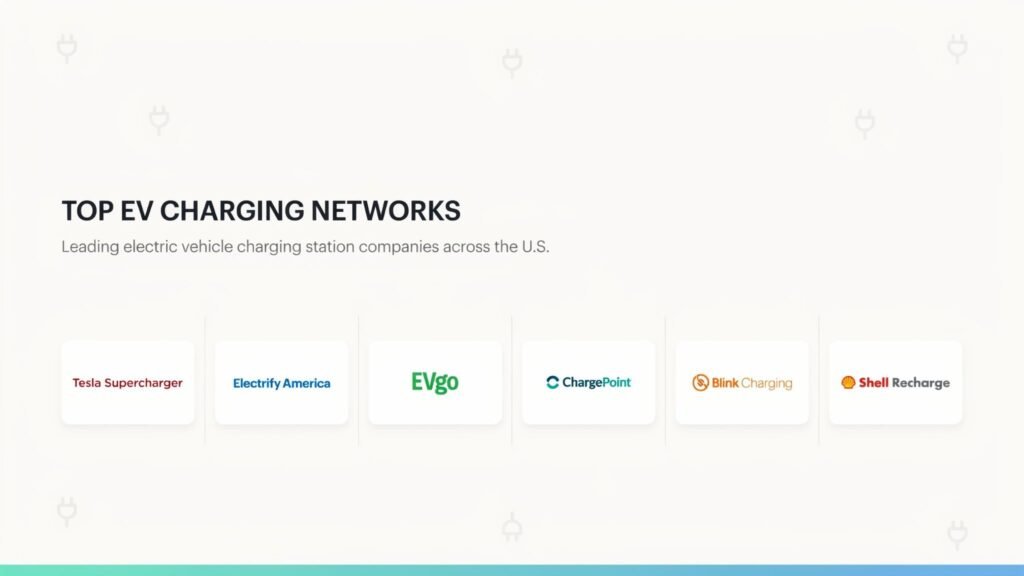
The charging network you pick matters almost as much as the charger itself, really, because connectivity, availability, and pricing can change the whole experience. Here’s a rough overview of some well known providers , without getting too fancy.
Tesla Charging Stations
Tesla runs one of the biggest and more dependable fast charging networks around, it’s called the Supercharger network. Tesla cars usually get priority access, but plenty of Supercharger stops now allow non Tesla EVs too, often using adapters, since the industry keeps moving toward more standardized connector types.
Tata Power Electric Vehicle Charging Station
Tata Power is one of the more prominent EV charging infrastructure providers in South Asia. They manage thousands of public charging points across highways, residential neighborhoods, and commercial locations. In other words, it’s a solid choice if you want both home charging and public charging options in the region.
Pilot and Flying J Electric Vehicle Charging Station
Pilot and Flying J, which most people recognize as travel stops for fuel, have also teamed up with major charging brands. They’ve added DC fast chargers at many of their sites along North American highways, which is a pretty big convenience for long distance EV drivers, you know the ones.
ClipperCreek Electric Vehicle Charging Station
ClipperCreek is a respected maker of Level 2 home and commercial EV chargers. Their stuff is generally durable and straightforward, the kind of equipment that electricians, and EV owners, tend to trust because the reliability is consistent.
Electric Vehicle Charging Stations in Sri Lanka
The electric vehicle charging stations in the Sri Lanka market is showing steady growth, mainly because EV imports keep increasing. A few major things driving it include
- Government supported charging build outs on key highway routes
- Private operators installing chargers at malls, hotels, and office buildings
- More home charging installation services becoming available in Colombo and other major towns
As EV adoption keeps rising, the charging network in Sri Lanka should expand a lot over the next few years, pretty much following the same patterns seen in other developing EV markets.
Portable Electric Vehicle Charging Stations
A portable electric vehicle charging station is basically a compact , mobile charger, it can plug into a standard outlet and it gives real flexibility for renters, apartment dwellers or even occasional travelers who don’t have fixed charging infrastructure available.
Advantages of portable chargers:
- No installation required
- Easy to carry during travel
- More affordable than fixed Level 2 units
- Compatible with most standard outlets
Limitations:
- Slower charging speeds compared to fixed Level 2 stations
- Not ideal as a primary charging solution for daily long-distance drivers
Electric Vehicle Charging Station Business Opportunity
The electric car charging stations business opportunity is pulling in entrepreneurs worldwide, mostly because EV demand keeps rising. If you’re thinking about taking an electric vehicle charging station franchise, you might want to look at a few things, not just the shiny part:
- Initial investment – It can be from a few thousand dollars for one single Level 2 unit up to six figures for a DC fast charging hub, depending on the setup and hardware
- Location strategy – Places with high traffic, like malls, highways, office parks, usually bring stronger returns, so thinking about vehicle flow matters
- Franchise support – Well known brands often bring franchising assistance such as site assessment, installation coordination, and marketing help
- Revenue model – Most operators use per kWh pricing, but some add membership subscriptions or time-based charging fees, which can change the whole cash flow picture
- Government incentives – A lot of regions offer subsidies for public charging infrastructure, this can really improve ROI especially early on
Also, this business model is still in an early growth phase in many markets, so early movers can grab those prime spots before more competition shows up and pricing gets tighter
Electric Vehicle Charging Station Reviews: What Users Say
When evaluating electric vehicle charging station reviews, look for feedback on:
- Charging speed consistency
- App reliability and payment ease
- Station uptime (how often chargers are out of service)
- Customer support responsiveness
- Pricing transparency
Reading recent user reviews on apps like PlugShare gives a more accurate, real-time picture than relying solely on company marketing.
Frequently Asked Questions (FAQs)
1. How much does it cost to install an electric vehicle charging station at home?
Home installation typically costs between $500 and $2,500, depending on your electrical panel’s condition, charger type, and local labor rates.
2. How do I find the nearest electric vehicle charging station?
Use apps like PlugShare or ChargePoint, your vehicle’s built-in navigation system, or Google Maps, all of which show real-time station availability.
3. Can I install a Level 2 charger myself?
No. Level 2 chargers require a dedicated 240V circuit and should always be installed by a licensed electrician for safety and code compliance.
4. Is a portable EV charging station worth buying?
Yes, especially if you live in an apartment or travel frequently without access to a fixed charger, though it charges slower than a Level 2 unit.
5. Which is the fastest type of electric vehicle charging station?
DC Fast Charging stations are the fastest, capable of charging most EVs to 80% in under 30–45 minutes.
6. Is investing in an EV charging station franchise profitable?
It can be profitable, particularly in high-traffic locations, though returns depend on investment size, local EV adoption rate, and government incentives.
7. Are Tesla Superchargers available for non-Tesla vehicles?
Many Tesla Supercharger locations now support non-Tesla EVs with the correct adapter, as part of the industry’s shift toward standardized charging connectors.
Final Thoughts
Whether you’re looking at the electric vehicle charging station cost, thinking about a home setup, or reviewing a franchise opening, grasping the basic parts discussed here gives you a strong edge to pick the right option. The EV charging industry is moving fast, and players such as Tesla, Tata Power, Pilot, Flying J, and ClipperCreek keep pushing improvements for accessibility and overall speed.
As the infrastructure grows, from big cities to newer locations like Sri Lanka it’ll become simpler to locate a nearby, dependable charging station. The real idea is to line up your charging solution with how you actually drive, what your budget allows, and the long term EV direction you’re aiming for.


0 Comments