It may seem peculiar if you have been looking at Tesla’s website over the past year or so, but the cost of leasing a Model 3 or Model Y is not the same price that you might have seen just last month. This is not a mistake. More than any other brand, Tesla adjusts lease pricing regularly, and often quite drastically, and can easily take car buyers by surprise.
This guide explains how Tesla leases are priced, how to calculate what you will end up paying every month (which may be different from the price in the ad) and when to look at the cars if you do not want to find yourself leasing a Model Y for hundreds of dollars more per month than the next guy leasing his car the following week.
Why Tesla Lease Pricing is So Unpredictable
Most of the traditional automakers lease vehicles through their dealers, meaning that the pricing goes through a chain of regional dealer markups, localized incentives, and plenty of negotiating. Not Tesla. Tesla sells and leases cars directly, sets pricing centrally, and can change it effectively without any notice whatsoever – sometimes even overnight, or many times within a quarter.
However, there is always a pattern if you know where to look, and it appears that Tesla usually responds to one of a few key pressures when setting lease prices:
- Delivery goals. Tesla announces deliveries quarterly, and it is no secret that Tesla will offer special lease and finance deals in the last week or two of each quarter to drive sales.
- Inventory status. When Tesla has unsold builds lying around, which is common in the period following a refresh that introduces new variants, leases are used as the most rapid means of clearing out the inventory.
- Changes to incentive structure. The federal EV tax credit environment changed dramatically from 2025 into 2026, and Tesla has taken advantage of leases and leasing-specific incentives to mitigate the impact for customers, then adjusted prices again as changes came through.
- Competition. When competing models like the Equinox EV and a refreshed Ioniq 5 started encroaching on Tesla’s pricing range, Tesla has responded with promotions using their own lease rates.
None of this means the pricing is random. It means it’s reactive, and if you’re not paying attention to timing, you can end up leasing the same car for a noticeably different payment than someone who waited three weeks.
The Three Numbers That Actually Determine Your Lease Payment
However, under all of the marketing hullabaloo, there are always just three factors that determine any Tesla lease offer. Grasping them makes one’s life much easier in terms of finding a truly worthy deal.
1. The vehicle’s price (capitalized cost). This starts with MSRP, including destination charges, and it’s also where any bundled software — most notably Full Self-Driving (Supervised) — gets factored in if it’s included in the lease package rather than sold separately.
2. The residual value. This is Tesla’s prediction of what the car will be worth at the end of your lease term, expressed as a percentage of MSRP. A higher residual value means Tesla is financing less of the car’s depreciation over your lease, which generally means a lower payment. For a typical 36-month lease at 12,000 miles a year, residuals have generally landed somewhere in the 50–56% range depending on the model, though this shifts model to model and quarter to quarter. Unlike with some other automakers, you can’t negotiate this number — Tesla sets it, and your job is really just to check it.
3. The money factor. It is an interest rate offered in any Tesla lease, represented as a decimal (for example, 0.00125) instead of percent. In order to convert it into a percent, the money factor has to be multiplied by 2,400. For example, a money factor of 0.00125 equates to 3% APR.
Multiply these three things together correctly, add taxes and fees, and you get your monthly payment. Get any one of them wrong in your own estimate — or misread how a promotion is structured — and your math will be off by a lot more than a few dollars.
Don’t Trust the Sticker Price — Calculate Your Effective Monthly Cost
Here’s the part that trips up a lot of people, and it’s honestly the single most useful thing to understand before you lease a Tesla: the big bold number Tesla advertises is rarely the whole picture.
Tesla, like most automakers, likes to advertise an attractively low monthly payment that assumes you’re putting a meaningful amount of money down at signing. So you’ll see something like “$299/month” in large type, and then in much smaller print, a due-at-signing figure that might be $3,000 or $4,000. If you don’t account for that upfront cost, you’re not actually comparing apples to apples against a competing deal that has a higher monthly rate but little or nothing due at signing.
The fix is to calculate your effective monthly cost — essentially, what you’d be paying every month if that down payment were spread evenly across the lease term instead of paid all at once:
Effective Monthly Cost = [(Advertised Monthly Payment × Lease Term in Months) + Amount Due at Signing] ÷ Lease Term in Months
Here’s a concrete way to see why this matters. Imagine two leases on similar cars, both 36 months:
- Lease A: $200/month with $1,500 due at signing
- Lease B: $185/month with $3,000 due at signing
On the face of it, it seems that Lease B is the better offer because the monthly figure is lower. However, when divided into installments, Lease A turns out to be worth about $1,000 less in total. The monthly number was only a disguise for an actual high down payment that made up for the monthly savings.
This is exactly the trap that shows up constantly in Tesla’s own promotional pricing. A “$299/month” Model 3 offer with roughly $4,000 due at signing often works out to an effective monthly cost closer to $400–$410 once you spread that down payment across 36 months. This does not necessarily make the deal a bad one – it may still prove excellent in comparison with the deals offered by other electric cars – but it is important to take into account the effective price in any case.
The proper calculator for a lease would be able to accommodate:
- Vehicle price and any negotiated adjustments
- Down payment or capitalized cost reduction
- Acquisition fee, which Tesla typically folds into the due-at-signing total rather than billing separately
- Residual value at lease end
- Money factor
- Sales tax, which varies significantly by state and is usually rolled into the monthly payment rather than paid separately
- Annual mileage allowance — typically a choice between 10,000, 12,000, and 15,000 miles a year, with lower mileage packages reducing your payment
This decision is worthy of its own consideration. The idea that it makes sense to choose the lower mileage rate to reduce your monthly payment by a couple of bucks is certainly appealing, but if you’re one of those drivers who drive well over 12,000 miles per year, then paying the excess mileage at the end of your lease might erase any savings that you may have made on the deal. In almost all cases, it will be better to spend a little more each month for the right mileage rate than to be surprised by a penalty rate.
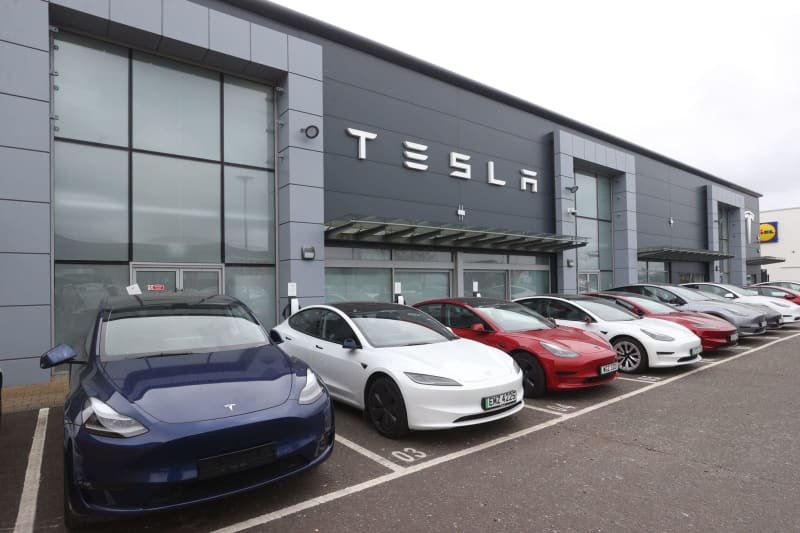
What Tesla Lease Rates Were Looking Like by 2026
It’s important to understand one thing here; any specific price point that is mentioned in an article of this nature will probably not last long due to how frequently Tesla changes its pricing. But looking at the pattern across 2026 tells you a lot about how to think about timing your own lease.
During the beginning months of the year, Tesla has been working aggressively with their lease pricing, in part as an effort to compensate for somewhat weak deliveries, but also due to the closing of federal EV tax credit programs. Model 3 Rear-Wheel Drive leases have hit lows of $299-$339 per month, and Model Y Long Range models have hit lows of about $399 a month – pretty good pricing for the segment, considering Tesla is still promoting some pretty low financing rates on certain trims.
That pricing didn’t hold steady, though. As the year progressed, Tesla raised lease payments on several popular trims — in some cases by as much as $100 a month — particularly after adjustments to federal incentive structures took effect. The newer Model Y L variant, notably, hasn’t been offered as a lease option at all, only as a purchase with a comparatively higher financing rate than other trims.
The practical takeaway isn’t “leases are cheap right now” or “leases are expensive right now” — it’s that the number changes fast enough that whatever you read today should be verified against Tesla’s actual site before you make a decision, not treated as gospel.
When to Actually Pull the Trigger
If timing matters this much, when should you actually lease? A few patterns have held up consistently enough to be worth planning around:
End of quarter truly is the best time. The last week of March, June, September, and December are when Tesla is really motivated to get cars out the door and meet their delivery goals, and that motivation translates to more favorable lease terms – either through a reduced money factor or through a flat-out promotional discount.
Just because you hear “flagship” trim doesn’t necessarily mean it’s the least attractive trim to lease. Because Tesla’s promotions change from trim and configuration, there can be periods where a Long Range model ends up being cheaper to lease than the basic trim.
It’s worth checking every trim rather than assuming the base model is automatically the better deal.
Inventory and demo units are worth a look. Tesla periodically discounts vehicles that are already built and sitting on a lot — sometimes former loaner or demo units — and these can come with meaningfully lower effective monthly costs than a custom order, in exchange for a little less choice over color or configuration.
Also check your individual state’s options, separate from anything Tesla offers. Some states offer their own EV subsidies or tax benefits, on top of what Tesla is offering you. These won’t be reflected in Tesla’s own cost calculator, so do some research for your individual state before you sign.
A Few Things You Should Know Before You Sign
Tesla generally doesn’t offer lease buyouts. With most other automakers, you have the option to purchase your leased vehicle at the end of the term for its residual value. Tesla, for most models, doesn’t offer this — you typically return the vehicle or transfer the lease to someone else. If there’s any real chance you might want to keep the car after you’ve leased it, that is an important consideration to consider in terms of leasing vs. buying.
The money factor can often be negotiated, even if the cost seems set in stone. While this isn’t guaranteed, it’s something worth trying, particularly if you have good credit.
Remember to look at the total cost, not the monthly cost. That point bears repeating because it’s by far the most common mistake made when comparing lease options – always remember to compare total costs, not the number that’s prominently displayed.
Lease or Buy? A Quick Gut Check
Leasing tends to make sense if you like the idea of a lower monthly payment, you expect to want a new car again in two or three years anyway, and your annual mileage is reasonably predictable and doesn’t run far past 12,000–15,000 miles. It also tends to suit people who like having Tesla’s latest hardware and software revisions without worrying about long-term depreciation.
Purchasing is generally better suited when you are planning on keeping the vehicle for the long term, if you want the ability to fully own it at some point without having monthly payments, or if you will put substantial miles on it above the typical limits of leasing.
There isn’t necessarily a right or wrong answer. It truly depends on your personal driving habits and whether you value flexibility over ownership.
Frequently Asked Questions
1. How often do Tesla lease rates change? Tesla adjusts lease pricing far more often than most automakers — sometimes multiple times within a single month. Changes are usually driven by inventory levels, quarterly delivery pushes, and shifts in federal or state EV incentives, so a price you see today may not hold next week.
2. What’s the difference between the advertised lease payment and my real monthly cost? The advertised payment often assumes a large amount due at signing, which isn’t reflected in that headline number. Your effective monthly cost spreads that upfront payment across the full lease term, giving a more accurate picture of what you’re actually paying each month.
3. Can I negotiate my Tesla lease rate? Tesla’s residual values are fixed and not open to negotiation, but the money factor (the lease’s interest-rate equivalent) is sometimes negotiable, particularly for buyers with strong credit. It’s worth asking, even though Tesla’s pricing is generally more rigid than a traditional dealership’s.
4. When is the best time to lease a Tesla? The final week or two of each fiscal quarter — late March, June, September, and December — tends to bring the most competitive lease offers, since Tesla is typically motivated to hit delivery targets during these windows.
5. Can I buy my Tesla at the end of the lease? Generally, no. Unlike many traditional automakers, Tesla doesn’t offer lease buyouts on most models. At the end of the term, you’ll typically need to return the vehicle or transfer the lease to someone else, so this is worth factoring in if you might want to keep the car long-term.
Final Thoughts
Tesla’s lease pricing moves more than most people expect, and that’s honestly the most important thing to internalize before you start shopping. The advertised monthly payment is a starting point, not the full story — always work out your effective monthly cost before comparing offers, pay attention to end-of-quarter timing, and double-check pricing directly on Tesla’s site right before you’re ready to sign, since it can shift with very little warning. Do that, and you’ll be in a much better position to know whether the deal in front of you is actually a good one, or just looks like one.
Disclaimer: Tesla sets their leasing prices, residual values, and money factors and updates them often, sometimes without any prior announcement. The information provided in this article is based on average price tendencies observed during the year 2026 and is provided for illustrative purposes only and does not represent actionable pricing.



0 Comments