Vehicles Info
Wisconsin Electric Vehicle Charging Tax:Explained in Simple
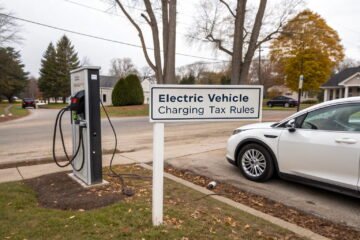
The Wisconsin electric vehicle charging tax has become an important topic as electric cars grow across the state. This policy affects how charging stations operate, how costs are calculated, and how drivers contribute to road funding. By introducing the Wisconsin electric vehicle charging tax, lawmakers aimed to balance transportation revenue Read more

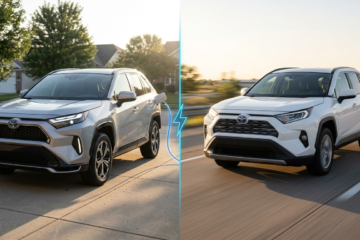
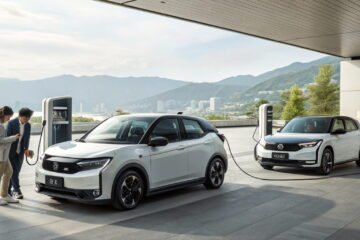

![Electric and Hybrid Electric Vehicles 2026: Complete Guide to Types, Technology & Buying Smart Electric and hybrid electric vehicles are cars powered fully or partially by electricity instead of gasoline alone. The four main types are battery electric vehicles (BEVs) that run purely on batteries, plug-in hybrid electric vehicles (PHEVs) that combine a battery with a gas engine, hybrid electric vehicles (HEVs) that self-charge while driving, and fuel cell electric vehicles (FCEVs) that use hydrogen. In 2026, EVs represented approximately 24% of global new vehicle sales, with hybrid demand surging 41.8% year-over-year in the used market as buyers seek practical electrification without range anxiety. BEVs: Zero emissions, 300–500+ mile range, requires charging infrastructure PHEVs: 20–50 miles electric + gas backup, no range anxiety HEVs: Self-charging, 40–55 MPG, no plug needed FCEVs: Hydrogen-powered, 300–400 mile range, limited infrastructure Introduction Choosing between an electric and hybrid electric vehicle in 2026 feels overwhelming. With battery technology evolving rapidly, charging infrastructure expanding, and new models launching monthly, how do you know which powertrain fits your life? This guide solves that problem. Unlike manufacturer websites that push one technology, or generic explainers that stop at definitions, we deliver data-driven comparisons covering battery degradation rates, AI-powered battery management, emerging solid-state technology, and real-world cost analysis. Whether you're a first-time EV shopper or a fleet manager evaluating electrification, you'll find actionable answers here. By the end of this guide, you'll understand: The 4 types of electric vehicles and which matches your driving habits Real battery degradation data from 8,000+ vehicles (not marketing claims) How AI is revolutionizing battery management for longer life and safer charging The 2026 vehicle landscape with specific model recommendations What Are Electric and Hybrid Electric Vehicles? Electric and hybrid electric vehicles use electric motors—powered by batteries, hydrogen fuel cells, or a combination with gas engines—to reduce or eliminate fossil fuel consumption and tailpipe emissions. They range from fully electric BEVs to self-charging HEVs that never plug in. Battery Electric Vehicles (BEVs) BEVs run entirely on electricity stored in large battery packs. They produce zero tailpipe emissions and are charged via external power sources. Modern BEVs like the Tesla Model Y and Hyundai Ioniq 5 offer 300–350 miles of EPA-rated range with battery capacities of 60–100 kWh. BEVs have roughly 90% fewer moving parts than gas vehicles, translating to lower maintenance costs over time. Plug-in Hybrid Electric Vehicles (PHEVs) PHEVs combine a battery-powered electric motor with a gasoline engine. You can drive 20–50 miles on electricity alone before the gas engine engages. Unlike HEVs, PHEVs must be plugged in to charge their larger battery packs. Popular 2026 models include the Toyota RAV4 Prime (42 miles electric range) and Hyundai Tucson Plug-in Hybrid (33 miles electric range). Hybrid Electric Vehicles (HEVs) HEVs—sometimes called "self-charging hybrids"—pair a gas engine with a small electric motor and battery. The battery charges through regenerative braking and engine operation, never requiring a plug. The 2026 Toyota Camry Hybrid achieves 52 MPG combined, while the Honda Civic Hybrid reaches 50 MPG city. HEVs excel for drivers without home charging access. Fuel Cell Electric Vehicles (FCEVs) FCEVs generate electricity by combining hydrogen with oxygen in a fuel cell. The only emission is water vapor. The Toyota Mirai and Hyundai Nexo offer 380–400 miles of range with 5-minute hydrogen refueling. However, with only ~60 hydrogen stations in the U.S., FCEVs remain a niche option. What Are the 4 Types of Electric Vehicles? The four types of electric vehicles are (1) Battery Electric Vehicles (BEVs), (2) Plug-in Hybrid Electric Vehicles (PHEVs), (3) Hybrid Electric Vehicles (HEVs), and (4) Fuel Cell Electric Vehicles (FCEVs). BEVs and FCEVs are fully electric, while PHEVs and HEVs combine electric and gasoline power. Type 1: Battery Electric Vehicles (BEVs) BEVs are the purest form of electrification. They rely solely on rechargeable battery packs and electric motors. With no internal combustion engine, BEVs deliver zero direct emissions and near-silent operation. Charging options include Level 1 (120V home outlet), Level 2 (240V home/workplace), and Level 3 DC fast charging (public stations). Type 2: Plug-in Hybrid Electric Vehicles (PHEVs) PHEVs function as electric vehicles for daily commutes and gas vehicles for road trips. Their battery typically holds 10–20 kWh, providing enough electric range for the average American commute (27 miles one way). Once depleted, the gas engine seamlessly extends range to 400–600 total miles. Type 3: Hybrid Electric Vehicles (HEVs) HEVs use both power sources simultaneously for maximum efficiency. The electric motor assists during acceleration and powers low-speed driving, while the gas engine handles highway cruising. This "hybrid synergy" reduces fuel consumption by 30–50% compared to conventional gas vehicles. Type 4: Fuel Cell Electric Vehicles (FCEVs) FCEVs store hydrogen gas in high-pressure tanks and convert it to electricity on demand. This eliminates the long charging times of BEVs but requires specialized hydrogen infrastructure. Currently, FCEVs are practical primarily in California and parts of Europe where hydrogen stations exist. Hybrid vs Electric Cars: Pros and Cons in 2026 Hybrids win on convenience, lower upfront cost, and no charging dependency. Electric cars win on zero emissions, lower operating costs, and superior performance. Your choice depends on driving habits, home charging access, and budget. Factor Hybrid (HEV/PHEV) Electric (BEV) Upfront Cost Lower ($25K–$45K) Higher ($35K–$100K+) Fuel/Energy Cost Moderate savings Significant savings (50–70%) Range 500–700 miles (combined) 250–500 miles (battery only) Charging Time 5 minutes (gas) 20–60 minutes (fast charge) Emissions Reduced (HEV) / Zero-electric (PHEV) Zero tailpipe Maintenance Moderate (dual systems) Low (fewer moving parts) Infrastructure Gas stations everywhere Growing, uneven by region Performance Good Excellent instant torque Hybrid Pros: Why Buyers Still Choose HEVs in 2026 No range anxiety: Refuel anywhere in minutes Lower purchase price: HEVs cost $5,000–$15,000 less than comparable BEVs Proven reliability: Toyota hybrids have 25+ years of real-world data Strong resale: Used hybrid demand surged 41.8% in Q1 2026 per iSeeCars data Hybrid Cons: The Trade-offs Still uses gasoline: HEVs emit CO₂; PHEVs emit when gas engine runs Complex dual systems: More components mean potential maintenance issues Policy uncertainty: Some regions phasing out hybrid incentives Electric Pros: Why EVs Are the Future Zero emissions: No tailpipe pollution, cleaner air in cities Lower operating costs: Electricity costs 50–70% less per mile than gas Instant torque: Faster acceleration from 0–60 mph Software updates: Over-the-air improvements extend vehicle life Electric Cons: Real Barriers in 2026 Charging infrastructure gaps: Rural and apartment-dwelling drivers face challenges Higher initial cost: Battery packs remain expensive despite declining prices Battery degradation concerns: Range loss over time worries used-EV buyers Battery Electric Vehicles vs Plug-in Hybrid Electric Vehicles: Which Fits You? Choose a BEV if you have home charging, drive under 50 miles daily, and prioritize zero emissions. Choose a PHEV if you lack reliable charging, take frequent road trips, or want electric benefits without range anxiety. Daily Commute Under 40 Miles BEV Wins If your daily driving stays within typical BEV range, you'll rarely use public charging. Home overnight charging at Level 2 (7–19 kW) fully replenishes most BEVs in 4–8 hours. The average American drives 37 miles per day—well within any modern BEV's capacity. Frequent Long-Distance Travel PHEV Wins PHEVs eliminate the "charging hunt" on road trips. With 300+ miles of gas range after electric depletion, you stop at familiar gas stations instead of planning around sparse fast chargers. The 2026 Kia Sportage PHEV offers 430 miles of total range. Home Charging Access Critical for BEV Without a garage or dedicated parking with charging, BEV ownership becomes inconvenient. PHEVs need only a standard outlet (Level 1) for overnight charging, making them viable for apartment dwellers. 5-Year Total Cost of Ownership Comparison Cost Factor BEV (Tesla Model 3) PHEV (Toyota RAV4 Prime) Purchase Price $42,000 $45,000 Federal Tax Credit $0 (phased out) $0 (phased out) Fuel/Electricity (5 yrs) $3,500 $7,200 Maintenance (5 yrs) $2,500 $4,000 Insurance (5 yrs) $7,500 $6,500 Total 5-Year TCO $55,500 $62,700 Note: Costs vary by region and driving habits. BEVs win on fuel and maintenance; PHEVs may win on insurance and resale. What Battery Types Power Electric and Hybrid Electric Vehicles in 2026? Lithium-ion batteries (NMC and LFP chemistries) dominate today's EVs. Solid-state batteries are entering early commercial production in 2026, while sodium-ion and silicon-anode technologies offer promising alternatives for cost and energy density. Lithium-Ion Batteries (NMC and LFP) The Current Standard Most 2026 EVs use either Nickel Manganese Cobalt (NMC) or Lithium Iron Phosphate (LFP) cells. NMC offers higher energy density (250–300 Wh/kg) for a longer range. LFP is cheaper, more durable, and safer—BYD's Blade Battery and Tesla's standard-range vehicles use LFP. Battery pack costs dropped to approximately $132/kWh in 2026. Solid-State Batteries The 2026–2028 Breakthrough Solid-state batteries replace flammable liquid electrolytes with solid materials, enabling 400–500 Wh/kg energy density (vs. 200–300 for lithium-ion). Toyota targets mass production by 2027–2028, with early prototypes showing 1,000 km range and 10-minute fast charging. China's first solid-state battery standard releases in July 2026. Sodium-Ion Batteries The Cost-Effective Alternative Sodium-ion batteries use abundant sodium instead of lithium, reducing material costs and supply chain risks. CATL's Naxtra platform delivers strong cold-weather performance and is ideal for affordable EVs and energy storage systems. Silicon Anode Batteries Higher Energy Density Silicon anodes can store 10x more lithium ions than graphite, significantly boosting capacity. Several 2026 EV models incorporate silicon-anode technology to extend range without increasing battery pack size. Battery Management Systems of Electric and Hybrid Electric Vehicles A Battery Management System (BMS) monitors, protects, and optimizes EV battery packs. It tracks State of Charge (SOC), State of Health (SOH), temperature, and cell balance to prevent overcharging, deep discharge, and thermal runaway. Core BMS Functions The Brain of Your Battery The BMS performs five critical functions: SOC Estimation: Calculates remaining charge (like a fuel gauge) SOH Monitoring: Tracks battery degradation over time Thermal Management: Keeps cells within optimal temperature range (15–35°C) Cell Balancing: Equalizes charge across hundreds of cells Safety Protection: Prevents overcharge, over-discharge, and short circuits AI-Enhanced BMS Machine Learning for Predictive Maintenance Modern BMS platforms integrate machine learning algorithms to improve accuracy beyond traditional methods. Random Forest Regression achieves 95.5% accuracy in SOC estimation, while LSTM networks predict battery Remaining Useful Life (RUL) with RMSE as low as 0.0123. These AI systems analyze voltage, current, and temperature patterns to detect anomalies before they become dangerous. Cell Balancing and Safety Preventing Thermal Runaway Advanced BMS uses isolation forest algorithms and Transformer-GAN models to identify fault patterns. If a cell shows abnormal heating or voltage drift, the BMS can isolate it, trigger cooling systems, or alert the driver. This proactive approach has made EV battery fires statistically rarer than gas vehicle fires per mile driven. Battery Degradation in Electric and Hybrid Electric Vehicles: Real Data EV batteries degrade at an average of 1.5–2.3% per year, depending on charging habits and climate. A 2026 study of 8,000+ vehicles found 8–9-year-old EVs retain 85% median capacity, while 4–5-year-old vehicles hold 93.5%—far exceeding warranty thresholds. Annual Degradation Rates What the Data Actually Shows According to Geotab's 2026 analysis of 22,700+ vehicles, average annual degradation is 2.3%. However, this varies significantly: Low DC fast charging (12% of sessions): 2.5% annual degradation High-power DCFC (>40% sessions over 100kW): 3.0% annual degradation Factors That Accelerate Degradation Frequent DC fast charging: Generates heat that stresses cells Extreme temperatures: Hot climates show 3x greater degradation than temperate zones; cold climates increase lithium plating risk High charge cycles: Daily full discharges accelerate aging Keeping battery at 100%: Extended high-SOC storage increases calendar aging How to Maximize Battery Life Proven Strategies Charge to 80% daily, 100% only for long trips Keep battery between 10–90% for daily use Precondition battery before fast charging in cold weather Park in shade during extreme heat Use Level 2 charging as your primary method AI Techniques for Electric and Hybrid Electric Vehicles Artificial intelligence is transforming EVs through smarter battery management, predictive maintenance, autonomous driving, and optimized charging. Machine learning models now predict battery failure before it happens and adjust charging schedules to extend battery life by up to 24%. Machine Learning for SOC/SOH Estimation Traditional BMS uses simple voltage-current models that struggle with accuracy. AI approaches outperform them significantly: Random Forest: 95.5% SOC accuracy LSTM Networks: Best for time-series SOH prediction GRU Models: R² score of 0.9577 for SOH estimation CNN-BiGRU Hybrid: Superior RUL prediction with RMSE of 0.00656 Predictive Maintenance Algorithms Fault Detection Before Failure AI-driven anomaly detection identifies battery faults early: Random Forest + KNN: Best accuracy for lithium-ion fault diagnosis Isolation Forest: Effective for detecting unusual cell behavior Transformer Models: Capture long-term dependencies in time-series data for thermal runaway prediction AI-Optimized Charging Smart Grid Integration AI charging platforms analyze battery status, driving patterns, and grid demand to: Schedule charging during off-peak hours for lower rates Precondition batteries before fast charging Enable Vehicle-to-Grid (V2G) bidirectional energy flow Reduce demand charges for fleet operators by 12–24% Electric Propulsion Motors for EVs and HEVs: 2026 Technology Permanent magnet motors dominate 2026 EVs, but emerging technologies like axial flux and in-wheel motors promise higher power density and design flexibility. The global electric motor market for EVs reached $46.8 billion in 2026, with hybrid vehicles holding 49.8% market share. Permanent Magnet Motors The Dominant Design Over 90% of 2026 EVs use permanent magnet synchronous motors for their high efficiency and power density. However, reliance on rare-earth materials (neodymium, dysprosium) creates supply chain risks. Manufacturers are actively reducing rare-earth content per motor. Axial Flux Motors Emerging High-Density Option Axial flux motors generate magnetic flux parallel to the rotation axis, delivering higher torque density in a compact "pancake" form factor. Daimler (via YASA acquisition) and Renault (WHYLOT partnership) are integrating axial flux motors into premium EV platforms for 2026–2027. In-Wheel Motors Future Mobility Concept In-wheel motors place the motor directly inside the wheel hub, eliminating drivetrain losses and enabling new vehicle architectures. While early projects faced challenges, Dongfeng demonstrated the first homologated passenger car with ProteanDrive in 2023, with fleet testing expanding in 2026. State of the Art and Trends in Electric and Hybrid Electric Vehicles The 2026 EV landscape is defined by ultra-fast charging (800V+ architectures), solid-state battery development, V2G integration, and AI-driven vehicle optimization. Global EV sales are projected to reach 24% of new vehicle sales by year-end. Ultra-Fast Charging 800V+ Architectures Modern EVs like the Hyundai Ioniq 5 and Porsche Taycan use 800V electrical architectures to enable 350kW DC fast charging, adding 200+ miles of range in 15–20 minutes. BYD introduced 1MW charging technology in 2026, potentially reducing charging times to under 10 minutes. Vehicle-to-Grid (V2G) Integration Your Car as a Power Plant V2G technology allows EVs to send stored electricity back to the grid or home. This turns EVs into mobile energy storage systems, providing grid stabilization, emergency backup power, and revenue opportunities for owners. Ford F-150 Lightning and Nissan Leaf lead V2G-capable models. Wireless Charging Advancements Eliminating Cables Wireless EV charging is moving from concept to reality. Systems under development include: Home garage pads: Park and charge automatically Public parking integration: Charge while shopping Dynamic road charging: Charge while driving (early testing) What Is the Need and Importance of Electric and Hybrid Electric Vehicles? Electric and hybrid vehicles are essential for reducing transportation emissions, improving urban air quality, and decreasing fossil fuel dependence. Transportation accounts for 29% of U.S. greenhouse gas emissions—electrification is the most viable path to decarbonization. Climate Impact Transportation Emissions Reduction EVs produce zero tailpipe emissions. Even when accounting for electricity generation, BEVs produce 60–70% fewer lifecycle emissions than gas vehicles. As grids incorporate more renewable energy, this advantage grows. PHEVs and HEVs serve as transitional technologies, reducing emissions by 30–50% compared to conventional vehicles. Energy Independence Reducing Fossil Fuel Reliance The U.S. imports approximately 8 million barrels of oil daily. Widespread EV adoption reduces this dependence while enabling integration with domestic renewable energy sources like solar and wind. Public Health Air Quality Improvement Vehicle emissions contribute to ozone, particulate matter, and nitrogen oxides—pollutants linked to asthma, heart disease, and premature death. EVs eliminate local tailpipe pollution, improving air quality especially in urban corridors and near schools. Electric and Hybrid Electric Vehicles List: Top Models for 2026 The best 2026 EVs combine range, charging speed, reliability, and value. Top picks include the Tesla Model Y (BEV), Toyota RAV4 Prime (PHEV), and Honda Civic Hybrid (HEV). Best BEVs for 2026 Model Range Battery Starting Price Tesla Model Y 310 miles 75 kWh $48,000 Hyundai Ioniq 5 303 miles 77.4 kWh $43,000 Kia EV6 310 miles 77.4 kWh $43,000 Ford F-150 Lightning 320 miles 131 kWh $65,000 BMW iX3 (new) ~400 miles 109 kWh $65,000 Best PHEVs for 2026 Model Electric Range Total Range Starting Price Toyota RAV4 Prime 42 miles 600 miles $45,000 Hyundai Tucson PHEV 33 miles 520 miles $40,000 Kia Sportage PHEV 34 miles 540 miles $40,500 Mazda CX-90 PHEV 26 miles 490 miles $50,500 Best HEVs for 2026 Model MPG Type Starting Price Toyota Camry Hybrid 52 combined Sedan $29,000 Honda Civic Hybrid 50 city Sedan $29,300 Hyundai Sonata Hybrid 47 combined Sedan $29,000 Toyota Prius Hybrid 57 combined Hatchback $28,000 5 Costly Mistakes When Buying Electric or Hybrid Vehicles The most expensive mistakes include ignoring total cost of ownership, overestimating range needs, neglecting charging infrastructure research, misunderstanding battery warranties, and overlooking insurance premiums. Mistake 1: Ignoring Total Cost of Ownership Focusing only on sticker price ignores fuel savings, maintenance, tax incentives, and resale value. A $45,000 EV may cost less over 5 years than a $35,000 gas car. Mistake 2: Overestimating Range Needs The average driver needs 37 miles daily. Buying a 400-mile range EV when a 250-mile model suffices wastes $10,000+ on unnecessary battery capacity. Mistake 3: Neglecting Charging Infrastructure Apartment dwellers without home charging face inconvenience and higher costs. Verify workplace, public, and overnight charging options before buying. Mistake 4: Skipping Battery Warranty Review Most manufacturers warranty batteries to 70% capacity for 8 years/100,000 miles. Understand what's covered—some warranties are prorated, others cover full replacement. Mistake 5: Forgetting Insurance Costs EVs often cost 10–20% more to insure than gas vehicles due to expensive battery replacement and specialized repair shops. Get quotes before purchasing. FAQ: Electric and Hybrid Electric Vehicles What's the difference between a hybrid and an electric car? A hybrid combines a gas engine with an electric motor, while an electric car runs solely on battery power. Hybrids refuel at gas stations; EVs plug in to charge. What are the 4 types of electric vehicles? The four types are Battery Electric Vehicles (BEVs), Plug-in Hybrid Electric Vehicles (PHEVs), Hybrid Electric Vehicles (HEVs), and Fuel Cell Electric Vehicles (FCEVs). Do hybrid cars need to be plugged in? HEVs (self-charging hybrids) do not plug in. PHEVs (plug-in hybrids) must be plugged in to charge their larger battery packs. How long do EV batteries last? EV batteries typically retain 85% capacity after 8–9 years and are designed to outlast the vehicle itself. Most manufacturers warranty batteries for 8 years/100,000 miles. Is it better to get a hybrid or electric car in 2026? Choose a hybrid if you lack charging access or drive long distances frequently. Choose electric if you have home charging, drive under 50 miles daily, and prioritize zero emissions. What is the downside of a hybrid car? Hybrids still use gasoline (emitting CO₂), have complex dual systems that may increase maintenance, and face policy uncertainty as some regions phase out hybrid incentives. Are electric cars worth it in 2026? Yes, for most drivers with home charging. Lower fuel and maintenance costs typically offset higher purchase prices within 3–5 years. EVs also offer superior performance and zero emissions. How much does it cost to replace an EV battery? Replacement costs range from $5,000 to $20,000 depending on capacity and vehicle. However, battery failures are rare within warranty periods, and most batteries last the vehicle's lifetime. What is a battery management system (BMS)? A BMS monitors battery health, charge level, temperature, and cell balance to optimize performance, prevent damage, and ensure safety. Can you charge an EV in the rain? Yes. EV charging systems are weatherproof and safety-rated for outdoor use. The connection is sealed, and charging in rain is completely safe. Conclusion Electric and hybrid electric vehicles in 2026 offer more choices than ever. Whether you choose a zero-emission BEV, a versatile PHEV, an efficient HEV, or an emerging FCEV, the key is matching the technology to your lifestyle. Remember: BEVs excel for home-charging commuters. PHEVs bridge the gap for road-trippers. HEVs deliver efficiency without infrastructure needs. And AI-powered battery management is making all electrified vehicles safer and longer-lasting. Ready to find your perfect electric or hybrid vehicle? Explore our [2026 Vehicle Comparison Tool] or read our [Complete EV Charging Guide] to make an informed decision today. Title: EV vs Hybrid 2026: 5 Hidden Costs Every Buyer Misses Description: Electric or hybrid? Discover 5 hidden costs, real range data & charging truths before you buy. See the full comparison inside.](https://modrenvehicles.com/wp-content/uploads/2026/02/image-5-360x240.png)